The Future of Affordable Housing: Smart Buildings Powered by Community-Owned Internet Networks
Affordable housing has always been about more than rent. It’s about stability, access, opportunity, and dignity. Yet in today’s world, reliable high-speed Internet is just as fundamental as hot water or electricity. Without it, residents face barriers to education, telehealth, job opportunities, social services, and community life.
But here’s the problem: traditional Internet providers rarely design services around the needs of low-income residents. They charge high prices, impose data caps, ignore building-wide solutions, and too often view affordable housing communities as unprofitable markets.
A new model is emerging—one rooted in local ownership, renewable energy, shared digital infrastructure, and community governance. This model transforms “affordable housing” into smart, connected, future-ready housing, capable of empowering residents rather than limiting them.
🌱
Why Smart Buildings Belong in Affordable Housing
As buildings incorporate smart thermostats, security systems, connected appliances, and community dashboards, connectivity becomes a core utility. However, these features require:
- Reliable broadband
- Low-latency networks
- Secure data pathways
- Local compute capacity
- Affordable access for every unit
Large ISPs often fall short. Community-owned networks, on the other hand, are designed from the ground up to serve the residents themselves, not shareholder value.
🏡
What Makes a Community-Owned Network Different?
Community-owned networks integrate:
1. Building-Wide Connectivity
Instead of selling individual contracts unit-by-unit, the building provides high-speed connectivity as a shared resident benefit—much like water or heating.
2. Local Control Over Data Infrastructure
A neighborhood micro data hub stores content locally, improves performance, and reduces bandwidth costs.
3. Solar + Battery Integration
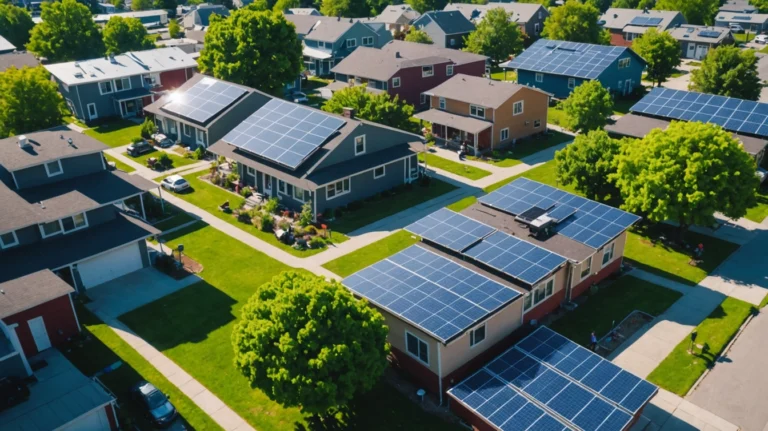
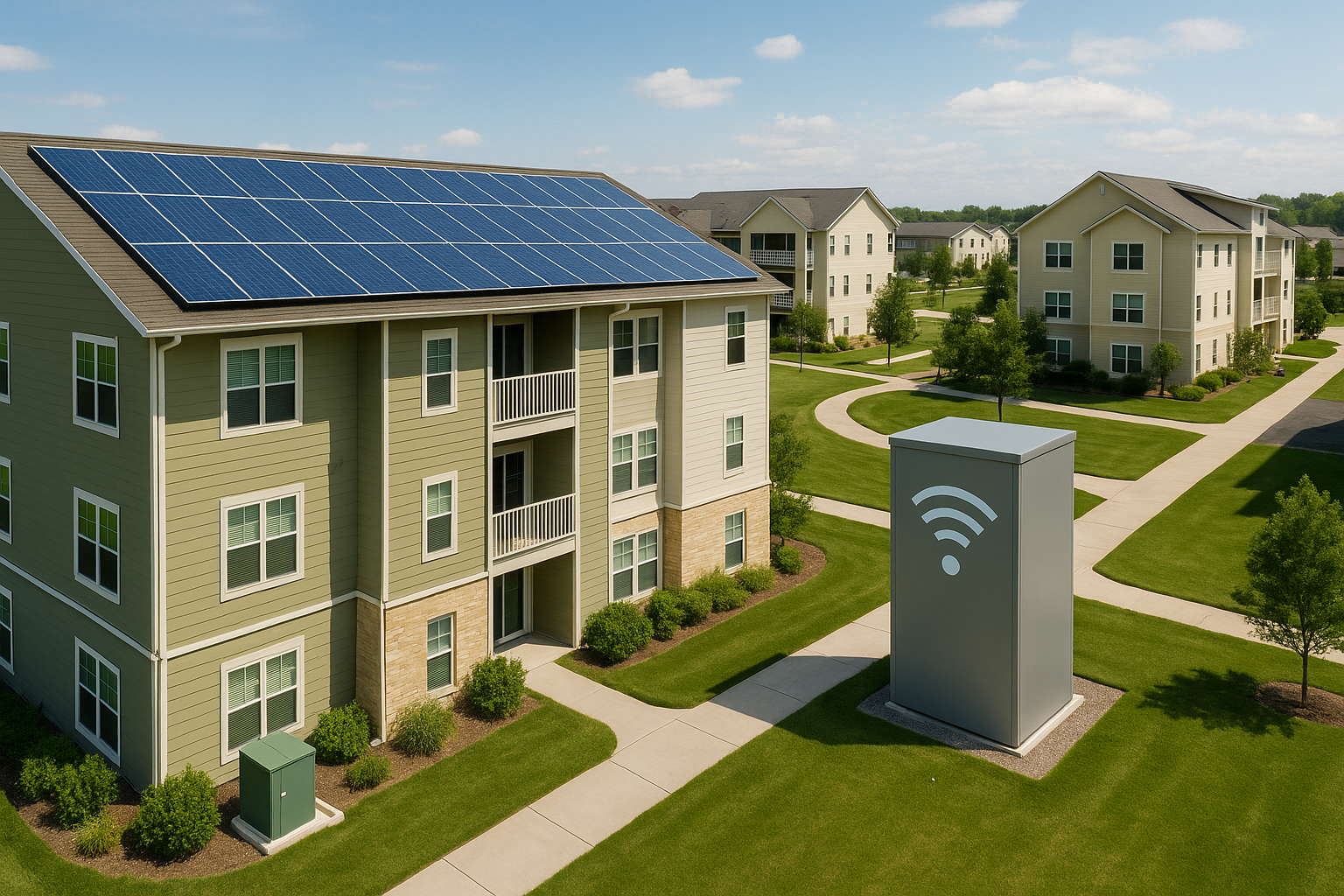
Rooftop solar panels and small-scale energy storage reduce operating costs and power Wi-Fi access points, edge compute nodes, and essential connectivity equipment—even during outages.
4. Cooperative or Nonprofit Governance
Residents and building operators help shape service levels, digital literacy programs, and reinvestment priorities.
5. Scalable Across Entire Developments
Whether it’s a 40-unit building or a multi-site affordable housing portfolio, the model scales with local demand—not investor profit motives.
⚡
The Renewable-Powered Smart Building Model
Imagine an affordable housing development where:
- Solar panels power the network
- A micro data hub sits within walking distance
- Mesh Wi-Fi blankets the building
- Residents connect automatically without confusing logins
- Elevators, lighting, and HVAC run on energy-aware systems
- Security cameras and entry systems sync directly to a local server
- Hallway switches, thermostats, and leak sensors are integrated and secure
- Energy dashboards help residents track usage and earn incentives
All powered by community-owned broadband—with costs stabilized for decades.
This is not speculative. It’s happening now in forward-thinking communities across the country.
🤝
How Community-Owned Networks Strengthen Affordable Housing Providers
Lower Operating Costs
Bulk connectivity reduces per-unit costs dramatically. Local data hubs reduce Internet transit fees.
Better Support for Residents
Digital navigation, ESL programs, telehealth, after-school learning, and workforce training all depend on reliable connectivity.
Improved Property Management
Smart building systems reduce energy waste, support predictive maintenance, and enhance resident safety.
Stronger Community Engagement
Local networks built through nonprofits or cooperatives open the door to participatory planning—giving residents a real voice.
Funding and Grant Alignment
Community-owned broadband aligns with federal and state priorities: BEAD, NTIA, HUD CDBG, and IRA clean energy incentives.
🔮
What the Future Looks Like
Affordable housing of the future is:
- Connected
- Resilient
- Community-owned
- Powered by clean energy
- Governed by residents
- Built on regenerative economic principles
When digital infrastructure becomes a shared community asset—not a monthly bill—affordable housing becomes a platform for opportunity.
And when buildings themselves participate in energy production and local data processing, entire neighborhoods benefit.
🌟
Conclusion
The future of affordable housing isn’t just cheaper rent—it’s intelligent, inclusive, connected living powered by networks that the community itself owns and governs.
Community-owned Internet transforms buildings into smart infrastructure, strengthens resident well-being, and keeps economic value circulating locally. It’s a modern, practical evolution of the same cooperative models that once brought electricity to underserved areas of America.
This is the future we’re building—one smart, connected community at a time.